





Company News


2026/10/12
When relays are mentioned, many people feel they are far removed from daily life. However, in semiconductor equipment, communication satellites, and aerospace systems, relays shoulder a crucial task: connecting or disconnecting circuits within milliseconds to ensure the safe operation of the system.
Today, using GLVAC's high-voltage vacuum relays as an example, we will clearly explain their working principles.
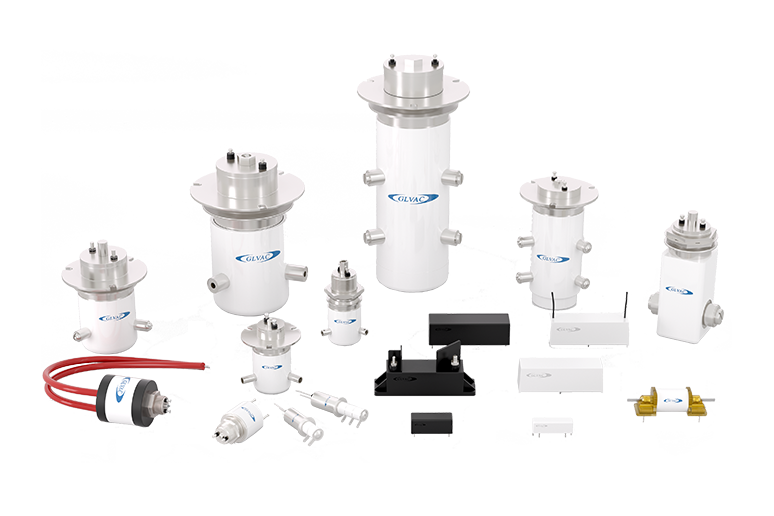
Controlling the Large with the Small
The most fundamental working principle of a relay can be summarized in four words: controlling the large with the small. It typically contains a coil, an armature, a spring, and a set of contacts. The working process is not complicated:
1. A small current is applied to the coil via the control terminal;
2. The coil generates a magnetic field;
3. The magnetic field attracts the armature to actuate;
4. The armature drives the moving contact to close or open with the static contact;
5. The main circuit is thereby connected or disconnected.
Once the coil is de-energized, the magnetic field disappears, the armature resets under the action of the spring, and the contacts return to their initial state.
The essence of this process is: using a low-voltage, low-current control signal to indirectly control a high-voltage, high-current load circuit. Electrical isolation is achieved between the control side and the load side, allowing operators to control high-voltage equipment without direct contact with the high-voltage circuits.
The Arcing Challenge
If a relay only operates in low-voltage, low-current scenarios, the principle is indeed straightforward. But once the voltage rises and the current increases, the problems become tricky, with arcing being the most typical challenge.
When relay contacts disconnect a high-voltage load, an electric arc is generated between the moving and static contacts. The arc temperature is extremely high, which erodes the contact surfaces, causing contact oxidation and increased contact resistance. In severe cases, the contacts may weld together, causing the relay to fail directly.
Relays operating in air have limited arc-quenching capabilities. Although air is an insulating medium, its dielectric strength is not high enough, making it difficult to extinguish arcs quickly under high-voltage conditions. This is a major reason why ordinary relays are hard-pressed to handle high-voltage applications.
Vacuum Arc Quenching
The solution to the arcing problem is straightforward: move the contacts out of the air and seal them inside a high-vacuum ceramic chamber.
1. Faster Arc Extinction
In a vacuum environment, the metal vapor generated by the arc diffuses rapidly into the surrounding low-pressure area. The arc is difficult to sustain and extinguishes much faster than in air. Consequently, contact erosion is significantly reduced.
2. Stronger Insulation Capability
A vacuum is one of the known media with the highest dielectric strength. For the same volume, a vacuum relay can withstand much higher voltages than a relay operating in air. The peak operating voltage of Guoli Electronics' high-voltage vacuum relays can reach the tens of kilovolts level.
3. Oxidation-Free Contacts
There is no oxygen inside the vacuum chamber, so the contact surfaces will not oxidize, and the contact resistance can remain stable over the long term. This is especially important for high-reliability equipment.
High-voltage vacuum relays typically also use wear-resistant contact materials, such as tungsten contacts, to withstand hot-switching load operations, further extending their service life.
The Switching Process
Tying the previous points together, the working process of a high-voltage vacuum relay can be understood as follows:
The control terminal issues a signal;
The coil generates a magnetic field, or a magnetic latching structure completes the state transition;
The armature drives the moving contact;
The moving and static contacts close or open inside the vacuum chamber;
The main circuit is connected or disconnected;
The arc is rapidly extinguished in the vacuum environment;
The relay maintains its current state, awaiting the next control signal.
For high-voltage vacuum relays with a magnetic latching structure, the coil only requires power during the instant of switching. After the transition, permanent magnets maintain the state, and the relay can retain its last working state even after the coil is de-energized. This design reduces coil power consumption and improves system reliability.
Application Scenarios
The application scenarios for high-voltage vacuum relays mostly place high demands on voltage tolerance, response speed, and service life.
In semiconductor equipment, RF power systems need to complete power switching and impedance matching in extremely short periods. High-voltage vacuum relays are used in process steps such as etching, thin-film deposition, and ion implantation. These scenarios require relays that are high-voltage resistant, fast-responding, and long-lasting—exactly what vacuum structures are designed for.
In aerospace, radar, and communication systems, high-voltage vacuum relays are also used in antenna coupling switching and circuit switching. These scenarios often involve harsh environments and extremely high reliability requirements.
Additionally, high-voltage vacuum relays are adopted in situations requiring remote circuit switching, such as submarine cable systems.
Conclusion
Relay working principle: the coil is energized to generate a magnetic field, which drives the contacts to actuate, and the main circuit is subsequently connected or disconnected. This basic logic remains unchanged.
The real difficulty lies in this: when the voltage rises to tens of kilovolts, when the current increases, and when the equipment needs to operate for long periods under conditions of vibration, high temperatures, and high frequencies—can the relay still actuate stably? Can the contacts maintain reliable contact? Can the arc be extinguished quickly?
Through a series of designs including vacuum sealing, ceramic-to-metal sealing, wear-resistant contact materials, and magnetic latching structures, GLVAC's high-voltage vacuum relays have extended the basic principle of "controlling the large with the small" into high-voltage scenarios. It is inconspicuous, yet it often determines whether a piece of equipment can operate safely and stably.


Latest News
-


Company News
2026/11/16
Can Lab-Grown Diamonds Really “Grow”? The Microwave Source Behind It Is a Big DealSpending a few thousand yuan to buy a diamond “grown” in a lab is gradually becoming a new consumption trend among young people. But many people are curious: how exactly do these sparkling lab-grown diamonds take shape in the laboratory?


More Details
-

Company News
2026/11/06
How Much Electricity Does a Wind Turbine Generate per Revolution? The Secret Lies in the "Switch"When you drive past a wind farm and see those massive white blades turning slowly, have you ever wondered: exactly how much electricity can they generate in a single rotation?
More Details
-
Company News
2026/10/29
How Are Chips Etched? A Look at the "Tuner" Inside Etching MachinesEvery morning, you unlock your phone with your fingerprint, scroll through short videos for a few minutes, and reply to a few WeChat messages.
More Details
-

Company News
2026/10/26
AI Empowerment · Intelligent Manufacturing for the Future | GLVAC Industrial AI Platform Launch Event
More Details
-

Company News
2026/10/12
Vacuum Relays: The Invisible Switch
More Details
-
Company News
2026/09/30
Vacuum Capacitors | The "Invisible Dispatcher" in the High-Frequency WorldOpen up a piece of high-end manufacturing equipment, and you will find radio frequency (RF) power supplies, matching networks, and control systems densely packed together.
More Details
-
Company News
2026/09/17
Vacuum Relay | Guarding High-Voltage Switching with Ceramic Vacuum SealingIn the electrical world, a switch seems simple—just two actions: making and breaking a circuit.
More Details
-
Company News
2026/08/19
Hydrogen Thyratron | A "Super Switch" Guarding Lives in NanosecondsWhen you step into a hospital's radiotherapy room, a medical linear accelerator is delivering a "precision strike" against cancer.
More Details
-
Company News
2026/08/12
High-Power Industrial Magnetrons | The Invisible Energy Engine Quietly Transforming Your Daily LifeMost people's understanding of "microwaves" begins with the household microwave oven. Once turned on, the turntable spins, and breakfast is heated in moments.
More Details
-

Company News
2026/07/30
High-Voltage Vacuum Relays | Cross-Industry Empowerment, Safeguarding Daily LifeProducts such as vacuum relays and DC contactors have long stepped out of factory workshops and become closely connected to our daily lives.
More Details
-
Company News
2026/07/20
High-Power Magnetrons | Empowering Diverse Industries with "Hardcore Tech"From high-temperature smelting to precision manufacturing, high-power magnetrons serve as the "energy engines" for industrial scenarios.
More Details
-
Company News
2026/06/15
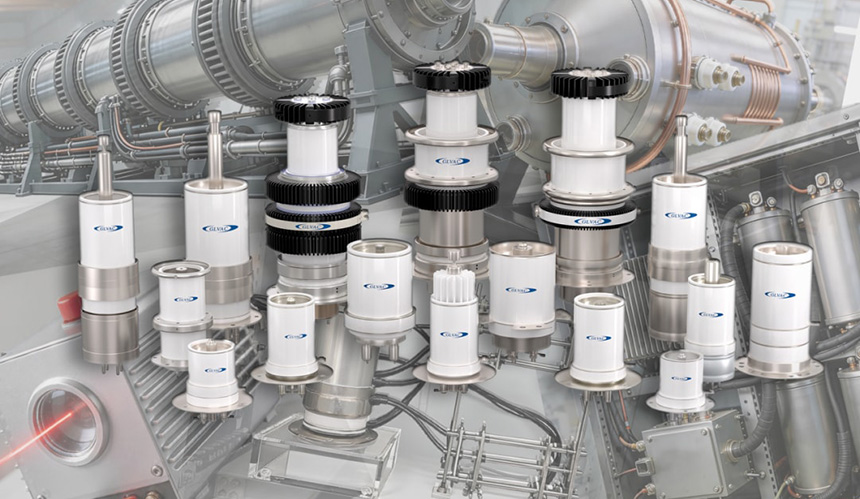
Hydrogen Thyratrons: The Core Switches for High-Peak Pulsed EnergyA hydrogen thyratron is a high-power gas discharge device that serves as a core, high-performance pulsed switch with a switching power reaching up to 10 GW.
More Details
-
Company News
2026/05/20
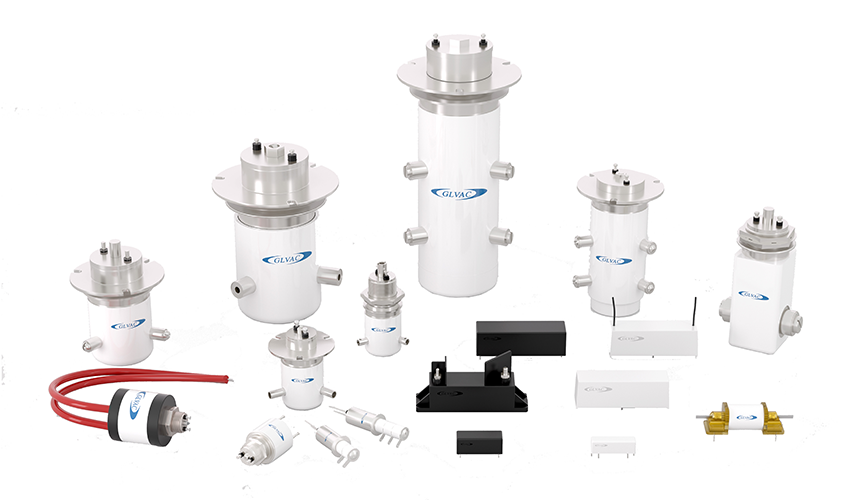
High-Voltage Relays: The Silent Switches of the High-Voltage WorldIn applications involving high voltage and high current, there is an unassuming yet crucial electronic component—the vacuum relay.
More Details
-
Company News
2026/04/02
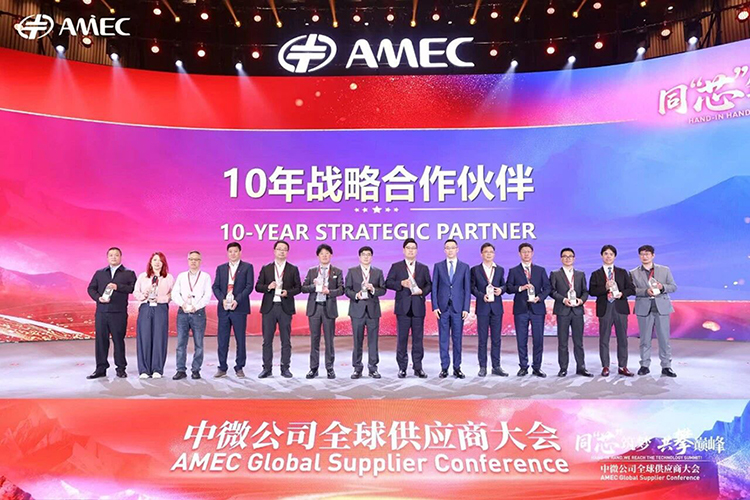
GLVAC was honored with the "10-Year Strategic Partner Award" by AMECOn March 28, the Global Supplier Conference of AMEC (Advanced Micro-Fabrication Equipment Inc. China) was grandly held in Shanghai.
More Details
-

Company News
2026/03/20
GLVAC Research Institute published an article in IEEE Grade-A journalRecently, the team of Li Yongming, Wang Shaozhe, and Zou Jianjun from Kunshan GLVAC Industrial Technology Research Institute of High Power Devices
More Details
-

Company News
2026/03/09
Invitation to SEMICON CHINA 2026Invitation to SEMICON CHINA 2026
More Details
-
Company News
2026/02/09
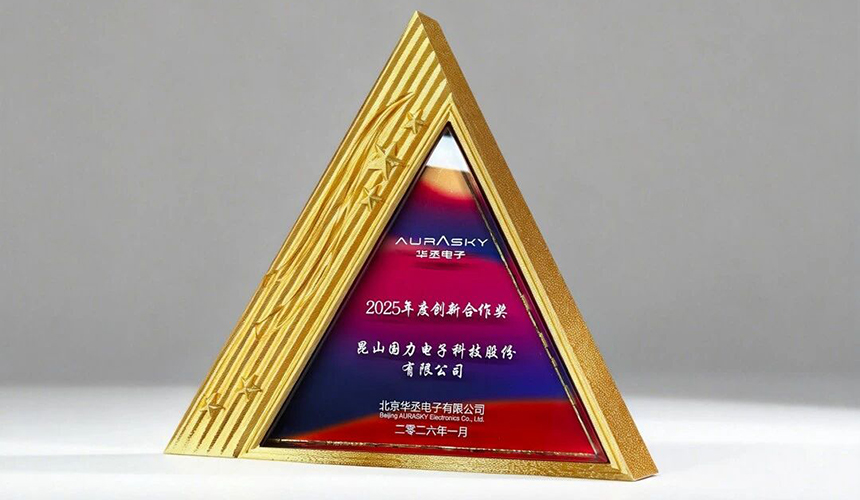
GLVAC Honored with NAURA's "2025 Annual Innovation Partnership Award"Recently, representatives from Beijing Huacheng Electronics Co., Ltd. — a subsidiary of NAURA — visited GLVAC Beijing office in person to present the company with the "2025 Annual Innovation Partnership Award."
More Details
-
Company News
2026/01/31
Three Core Vacuum Electronic Devices: Building the Energy Control System for Controlled Nuclear FusionNuclear fusion is fundamentally a reaction in which light atomic nuclei combine under extreme temperatures and pressures to form heavier nuclei, releasing vast amounts of energy.
More Details
-
Company News
2025/12/19
CW Magnetron: A Steady Source of Microwave Energy for Industry and Scientific ResearchIn the evolution of microwave technology, the magnetron has played a pivotal role. Among its various types, the continuous wave (CW) magnetron stands out as a crucial component due to its ability to deliver stable, continuous microwave energy over extended periods.
More Details
-
Company News
2025/12/17
Breaking Through Energy Boundaries: A Comprehensive Overview of High-Power Magnetron Applications Across IndustriesAs a core device capable of efficiently generating microwave energy, the magnetron has continuously shattered boundaries in energy applications since its inception.
More Details
-
Company News
2025/12/08
High-Power Magnetrons Empower Microwave Sources to Unlock New Diamond ApplicationsDiamond, the hardest material in nature, is rapidly expanding into high-end fields such as semiconductor thermal management, power electronics, quantum technologies, and optical devices.
More Details
-
Company News
2025/10/22
Vacuum Interrupter: the core component that ensures reliable operation of the power gridIn the power equipment system, the vacuum Interrupter, as the core component of the vacuum switch, plays an important role in connecting, carrying, and breaking current.
More Details
-
Company News
2025/10/14
Maintenance and use of GLVAC vacuum capacitorsGLVAC ceramic vacuum capacitors have been widely used in modern high-end manufacturing equipment due to their unique performance advantages.
More Details
-
Company News
2025/08/08
GLVAC endows eVTOL with new powerCurrently, the low-altitude economy is experiencing vigorous development, and low-altitude passenger transport is undoubtedly one of its most valuable applications.
More Details
-
Company News
2025/06/12
The world's first P-band high-power metamaterial klystron has been successfully developedOn June 7, 2025, led by the accelerator RF team of the China Spallation Neutron Source (CSNS), GLVAC in collaboration with the research group of Professor Zhaoyun Duan from the School of Electronic Science and Engineering at University of Electronic Science and Technology of China
More Details
-
Company News
2025/04/11
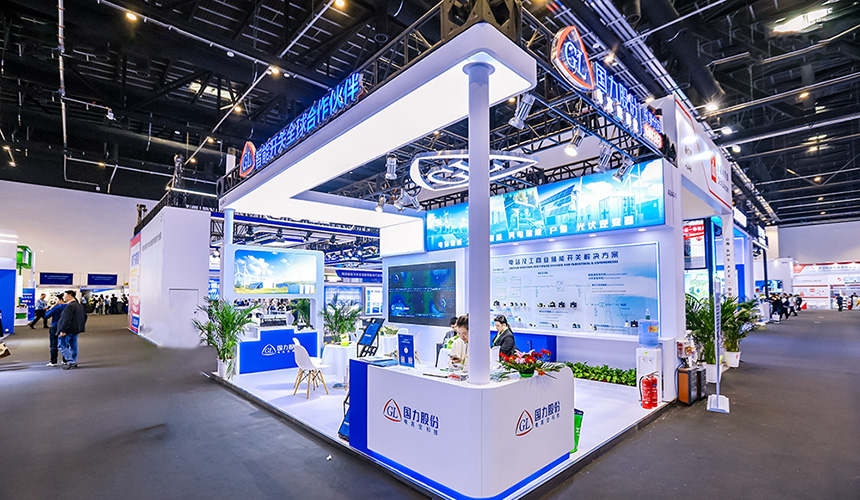
Ruipu Electric showcases its energy storage switch solution at the 13th ESIEOn April 10, 2025, the 13th Energy Storage International Conference And Expo(ESIE2025) grandly kicked off at the Capital International Exhibition Center of China. This exhibition has attracted top energy storage companies from home and abroad to participate, exploring the role of core technologies and system integration in promoting industrial upgr
More Details
-
Company News
2024/11/14
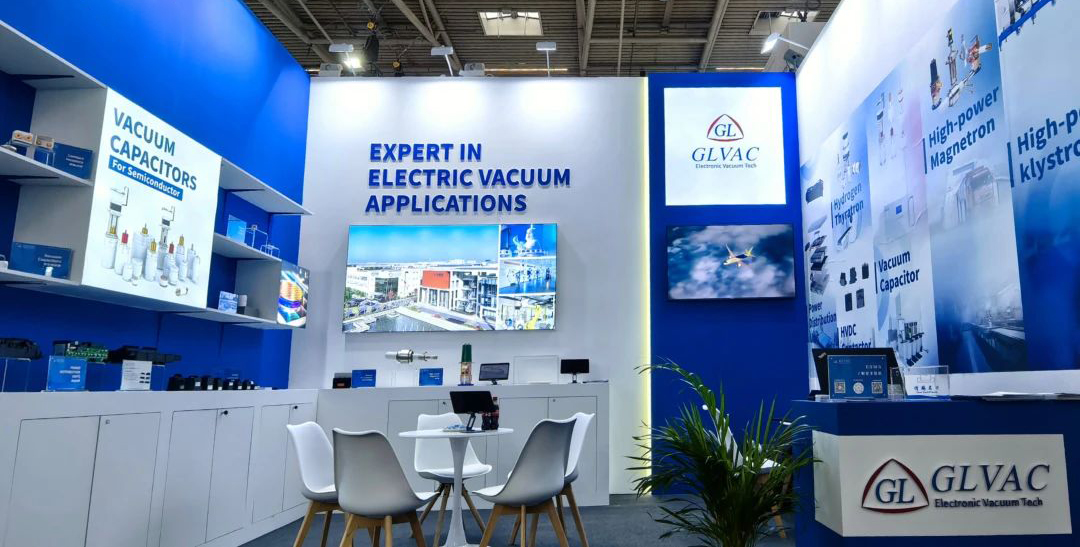
Electronica 2024On November 12th, the highly influential event in the global electronics industry, electronica 2024, grandly opened at the Munich Exhibition Center. GLVAC showcased its star exhibits such as semiconductors, new energy, energy storage, and scientific devices at this exhibition.
More Details
-
Company News
2024/11/07
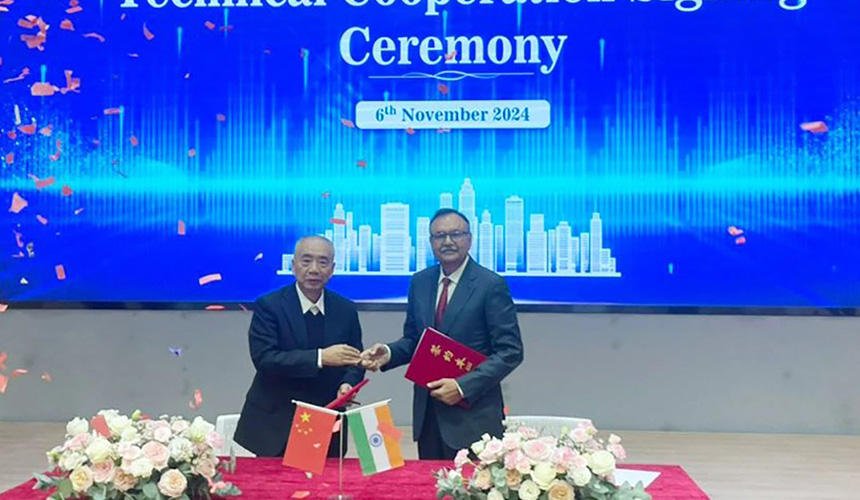
Guoli Yuantong signed a cooperation agreement with Indian listed company Sterling ToolsOn November 6, 2024, Guoli Yuantong New Energy Technology Co., Ltd. (hereinafter referred to as "Guoli Yuantong") and Sterling Tools Ltd. (hereinafter referred to as "Sterling") held a signing ceremony in Kunshan, Jiangsu Province.
More Details
-
Company News
2023/12/12
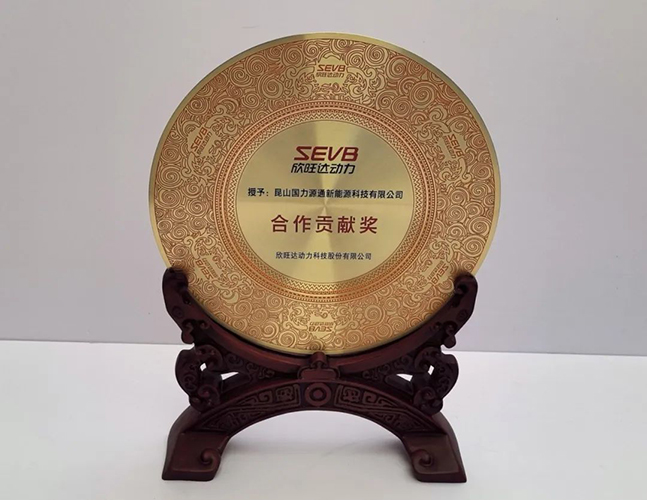
Guoli Yuantong was awarded the 2023 Collaboration Contribution Award by SEVBOn December 9, 2023, Kunshan Guoli Yuantong New Energy Technology Co., Ltd. (referred to as "Guoli Yuantong")
More Details
-

Company News
2023/11/09
Guoli Yuantong Won the "Chinese Heart" 2023 Annual Powertrain Components Gold AwardOn October 27, the 2023 "Chinese Heart" Annual Powertrain Components Evaluation, co-organized by Auto Sports magazine and the School of Automotive Engineering at Shanghai Jiao Tong University, with support from the Government of Gaoyou City, Jiangsu Province, came to a successful conclusion.
More Details
-
Company News
2021/12/31
GLVAC is honored to receive the CATL 2021 Annual Outstanding Supplier AwardAt the moment when the New Year's bells are about to ring, on the last day of 2021, Guoli Yuantong received the most precious New Year’s gift
More Details
-
Company News
2020/03/10
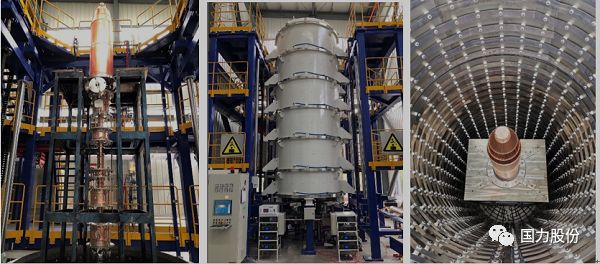
The first prototype of the CEPC 650 MHz klystron successfully completed tests achieving a pulse power of 800 kW and a continuous wave (CW) power of 400 kWOn February 27 and March 7, the first prototype of the 650 MHz klystron for the Circular Electron and Positron Collider (CEPC)
More Details
-
Company News
2018/07/13
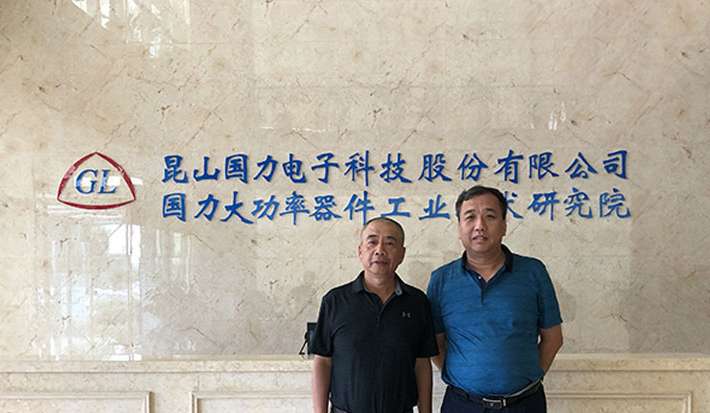
NAURA visits GLVACOn July 12, 2018, Mr. Jinrong Zhao, President and CEO of NAURA Technology Group Co., Ltd., came to visit our company, Mr. Jianping Yin, President of Kunshan GuoLi Electronic Technology Co., Ltd., received and accompanied NAURA team, and both parties had a business negotiation.
More Details


Get Professional Solutions
We are looking forward to engaging with you to explore more solutions for electric vacuum devices.


